- Free Consultation: (888) 950-0011 Tap Here To Call Us



How Federal Criminal Investigations Work in California


Published by KN Law Firm, APLC | Glendale, CA | Last Reviewed: March 2026
If you’ve received a call from the FBI, been served a grand jury subpoena, or simply heard through a colleague that federal agents have been asking questions about you, the fear can be overwhelming. Federal investigations are a different world from state-level criminal cases — more secretive, longer-running, and prosecuted by some of the most experienced attorneys in the country. The stakes are almost always higher, and the consequences of ignoring early warning signs can be catastrophic.
At KN Law Firm, APLC, we represent individuals and businesses throughout Glendale, Los Angeles, Burbank, Pasadena, and all of Southern California who are caught in the crosshairs of federal criminal investigations. This guide is designed to help you understand exactly how the federal investigation process works in California — and why retaining experienced legal counsel the moment you suspect federal scrutiny is the most important decision you can make.
What Makes a Federal Crime Different from a State Crime?
Most criminal offenses in California — assault, DUI, theft — are prosecuted in Los Angeles County Superior Court under state law. Federal crimes, by contrast, are offenses that violate United States federal statutes (Title 18 of the U.S. Code and others) and are prosecuted in the U.S. District Court for the Central District of California, located in downtown Los Angeles.
Federal cases are handled by Assistant United States Attorneys (AUSAs) from the U.S. Attorney’s Office, not local district attorneys. Federal prosecutors typically have more resources, longer statutes of limitations, and mandatory minimum sentencing guidelines that severely restrict a judge’s discretion.
Common Federal Crimes Investigated in Southern California
Southern California’s dense population, major ports, international borders, and financial centers make it a hotbed for federal law enforcement activity. Common federal charges in the Los Angeles and Glendale area include:
- Drug trafficking (particularly involving cartels and cross-border distribution)
- Wire fraud and mail fraud (18 U.S.C. § 1343 / § 1341)
- Healthcare fraud (especially around LA’s large medical billing ecosystem)
- Money laundering (18 U.S.C. § 1956)
- Tax evasion and tax fraud (IRS Criminal Investigation Division)
- RICO / organized crime
- Child exploitation and internet crimes
- Immigration fraud
- Bank robbery and financial institution fraud
- Public corruption
Federal investigations often run for months or even years before any arrest or indictment occurs. You may be investigated long before you’re ever approached.
The Stages of a Federal Criminal Investigation
Understanding how federal investigations unfold is crucial. Unlike a state case — where you might be arrested on the spot — federal cases build methodically. Here are the four primary stages:
Stage 1 – Predication and Initial Intelligence Gathering
Every federal investigation must begin with predication — a legitimate basis for opening the case. This might be a tip from an informant, a suspicious activity report (SAR) filed by a bank, a referral from another agency, or data uncovered during an unrelated investigation.
At this stage, investigators are watching quietly. They may be reviewing financial records, monitoring public social media, or developing sources close to you. You likely won’t know this is happening.
Stage 2 – Active Investigation (Surveillance, Subpoenas, and Wiretaps)
Once a case is opened, federal agents from agencies like the FBI Los Angeles Field Office, DEA, IRS Criminal Investigation, or Homeland Security Investigations (HSI) begin more aggressive fact-finding. This can include:
- Physical and electronic surveillance — agents may tail you, monitor your location, or place you under video observation
- Subpoenas for records — your bank, employer, email provider, or business partners may be served subpoenas compelling them to turn over records without notifying you
- Wiretaps — federal wiretaps under Title III require judicial approval but are a powerful investigative tool in drug trafficking, organized crime, and fraud cases
- Informants and undercover agents — federal agencies routinely use cooperating witnesses or place undercover agents in proximity to suspects
- Search warrants — if agents develop probable cause, they may execute a search warrant at your home, office, or vehicle
This is often where people make their biggest mistakes — speaking to agents without an attorney, deleting files that could constitute obstruction, or transferring assets in ways that look like consciousness of guilt.
Stage 3 – Grand Jury Proceedings
Before the government can formally charge you with a federal felony, it must typically present its evidence to a federal grand jury. Grand juries in the Central District of California consist of 16–23 citizens who hear evidence in secret under Rule 6(e) of the Federal Rules of Criminal Procedure.
Grand jury proceedings are one-sided: the prosecutor presents evidence, and the target has no right to appear or present a defense. The grand jury’s role is simply to determine whether probable cause exists to indict. Because of this, the grand jury almost always returns an indictment when asked — leading to the famous saying that a prosecutor could “indict a ham sandwich.”
If you receive a grand jury subpoena — whether to testify as a witness or to produce documents — contact a federal criminal defense attorney immediately. Your response to that subpoena, and whether you assert your Fifth Amendment rights, can have profound consequences.
Stage 4 – Arrest, Indictment, or Declination
After the grand jury votes, one of three outcomes occurs:
- Indictment — A “true bill” is returned, and you are formally charged. An arrest warrant may be issued.
- Information — In some cases (often involving plea negotiations), the government files charges directly without a grand jury.
- Declination — The government decides not to prosecute, either because the evidence is insufficient or because prosecutorial resources are directed elsewhere.
If indicted, your case moves to arraignment in the U.S. District Court, Central District of California, where you will enter a plea and begin the pretrial litigation process.
Are You a Target, Subject, or Witness? What the Labels Mean
Federal investigators categorize people in their investigations into three distinct groups. Knowing which category you fall into changes everything about how you should respond.
| Label | Definition | Your Risk Level |
|---|---|---|
| Target | Substantial evidence links you to a crime; prosecution is likely | 🔴 Highest — Invoke rights immediately |
| Subject | Your conduct is within the scope of the investigation | 🟡 Moderate — Attorney required before any cooperation |
| Witness | You have information but are not suspected of wrongdoing | 🟢 Lower — Still consult an attorney before testifying |
Critically, federal agents are not required to tell you your true status, and that status can change. A person who enters an interview as a “witness” can be charged based on statements made during that very interview.
Federal Agencies That Investigate Cases in the Los Angeles Area
Several federal law enforcement agencies operate actively throughout Glendale, Los Angeles, and Southern California:
- FBI – Los Angeles Field Office (Federal Building, Wilshire Blvd): Handles organized crime, public corruption, terrorism, cyber crimes, white collar fraud
- DEA – Los Angeles Division: Drug trafficking, cartel investigations, pill mill cases
- IRS – Criminal Investigation (IRS-CI): Tax fraud, money laundering, financial crimes
- HSI – Homeland Security Investigations: Immigration fraud, human trafficking, transnational crime
- ATF – Los Angeles Field Division: Weapons trafficking, arson, explosives
- U.S. Postal Inspection Service: Mail fraud, identity theft, drug shipments through USPS
- Secret Service – Los Angeles Field Office: Financial crimes, counterfeit currency, wire fraud
Any one of these agencies — or a multi-agency task force — could be building a case against you right now without your knowledge.
Federal vs. State Prosecution: A Side-by-Side Comparison
| Factor | State (LA County Superior Court) | Federal (U.S. District Court, CD Cal) |
|---|---|---|
| Prosecutor | LA County District Attorney | U.S. Attorney’s Office (AUSA) |
| Sentencing | California Penal Code guidelines | Federal Sentencing Guidelines (mandatory) |
| Parole eligibility | Often available | Federal system abolished parole; 85% of sentence served |
| Investigation length | Days to months | Months to years |
| Resources | Significant | Vastly greater |
| Conviction rate | ~75–80% | ~90%+ at trial |
| Plea bargaining | Common, flexible | Structured, often less flexible |
The federal conviction rate at trial exceeds 90% — making early, strategic defense intervention critical.
What to Do If You Learn You’re Under Federal Investigation
If you have any reason to believe you are being investigated federally, take these steps immediately:
- Do not speak to federal agents without an attorney. You have an absolute Fifth Amendment right to remain silent. Anything you say — even if you believe it’s innocent — can and will be used against you. Federal agents are highly trained interrogators.
- Do not destroy, delete, or alter any documents or records. Obstruction of justice under 18 U.S.C. § 1519 is itself a serious federal crime, punishable by up to 20 years in prison.
- Do not contact potential witnesses or co-subjects. This can be charged as witness tampering or obstruction.
- Retain a federal criminal defense attorney immediately. An experienced attorney can contact the investigating agency or U.S. Attorney’s Office on your behalf to learn your status, negotiate proffer agreements if appropriate, and begin building your defense while the evidence is still fresh.
- Preserve all potentially relevant communications and records. Your attorney will advise you on a litigation hold to protect materials that may be subject to discovery.
The earlier you involve counsel, the more options you have — including potentially negotiating a cooperation agreement, securing immunity, or persuading the government not to file charges at all.
Frequently Asked Questions About Federal Investigations in California
How long does a federal criminal investigation take in California?
Federal investigations can last anywhere from several months to several years. Complex white collar, drug trafficking, or RICO cases often run two to four years before any indictment. The investigation phase is entirely secret, so most people don’t realize they are under scrutiny until the government is ready to move.
Can I be investigated federally without knowing it?
Yes. Federal law enforcement agencies routinely conduct covert investigations. Subpoenas issued to third parties (your bank, your employer, your internet provider) do not require them to notify you. You may only learn of the investigation when agents approach you, execute a search warrant, or when a grand jury subpoena arrives.
What happens if I talk to the FBI without a lawyer?
Any statement you make to a federal agent can be used against you. More critically, making a false statement to a federal agent — even without being under oath — is a separate federal crime under 18 U.S.C. § 1001, punishable by up to five years in prison. Always consult with an attorney before speaking to any federal investigator.
What is a proffer agreement in a federal case?
A proffer agreement (sometimes called a “queen for a day” letter) allows a suspect or target to provide information to federal prosecutors in exchange for a limited promise that their statements won’t be used directly against them. These agreements are complex and must be negotiated carefully — the protections are narrower than most people expect.
What court handles federal criminal cases in the Los Angeles area?
Federal criminal cases in Los Angeles, Glendale, Burbank, and Pasadena are handled by the U.S. District Court for the Central District of California, headquartered at the Edward R. Roybal Federal Building and U.S. Courthouse at 255 E. Temple Street, Los Angeles, CA 90012.
Should I hire a different attorney for a federal case than a state case?
Yes. Federal criminal defense requires specific knowledge of the Federal Rules of Criminal Procedure, the U.S. Sentencing Guidelines, federal evidence rules, and the practices of the U.S. Attorney’s Office. Not all criminal defense attorneys practice in federal court. Ensure your attorney is admitted to and experienced in the U.S. District Court, Central District of California.
Contact a Glendale Federal Criminal Defense Attorney Today
A federal investigation is not something to navigate alone or delay addressing. The decisions you make in the earliest stages — before any charges are ever filed — can mean the difference between freedom and a federal prison sentence.
KN Law Firm, APLC represents clients facing federal investigations and charges throughout Glendale, Los Angeles, Burbank, Pasadena, and all of Southern California. Our attorneys are experienced in the U.S. District Court for the Central District of California and understand how federal prosecutors build their cases — and how to dismantle them.
Don’t wait. Call us now for a Free Confidential Consultation.
📞 (888) 950-0011
📧 info@kntrialattorneys.com
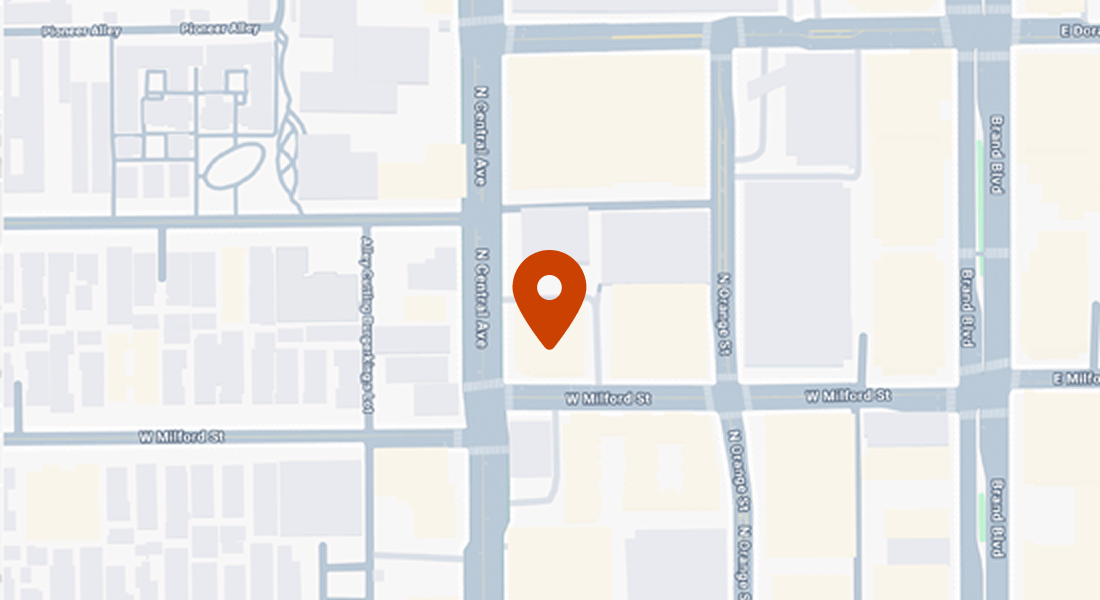
📍 500 N Central Ave #650, Glendale, CA 91203
We are available to take your call. The sooner you contact us, the more we can do to protect you.
The information provided in this article is for general educational purposes only and does not constitute legal advice. Reading this content does not create an attorney-client relationship between you and KN Law Firm, APLC. Every federal criminal case is unique, and the law is subject to change. If you are facing a federal investigation or criminal charges, you should consult with a qualified federal criminal defense attorney immediately. Do not rely on this article as a substitute for professional legal counsel.
Visit Us